
Practice Drills You Can Do on a Small putting green
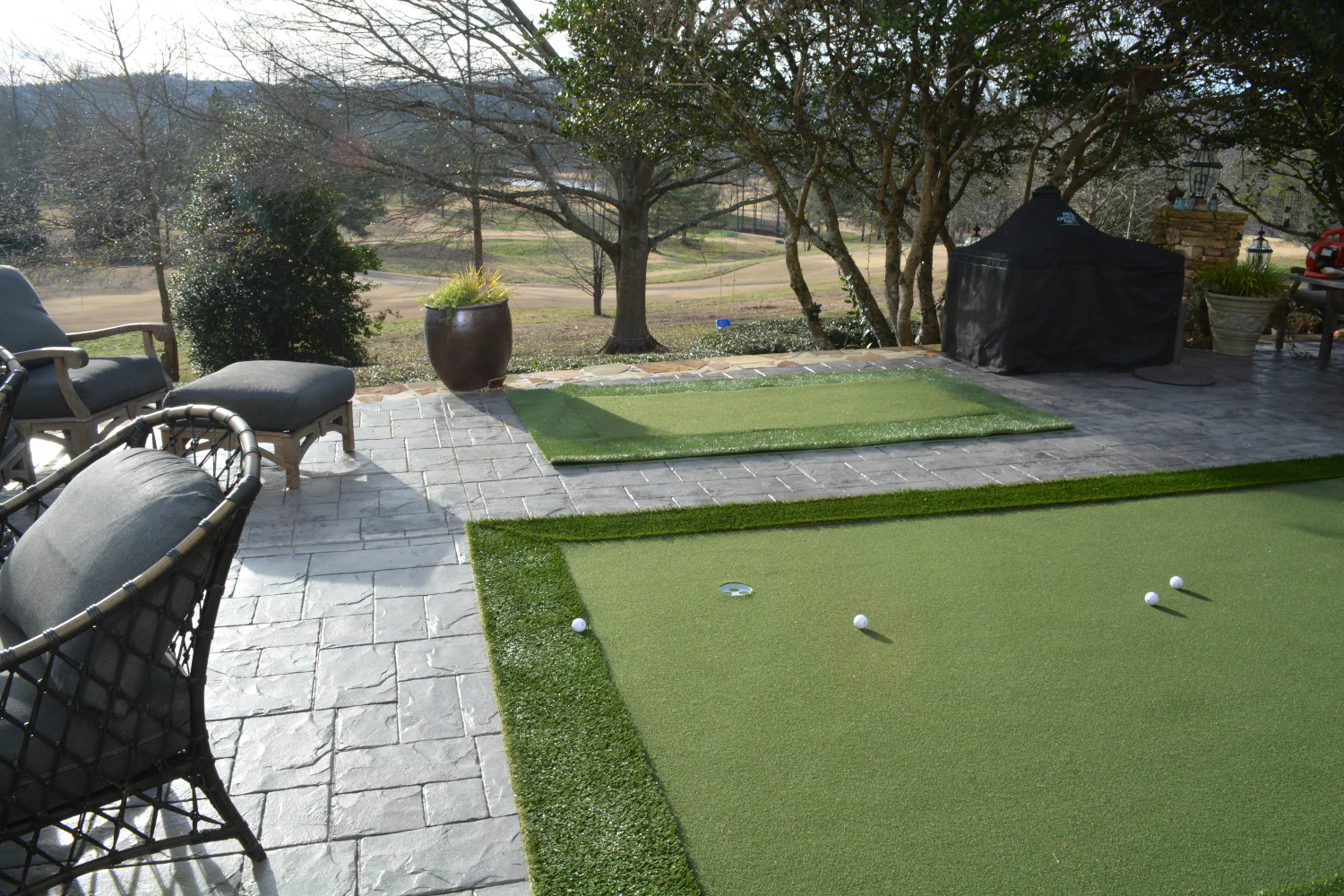
If you've added a putting green for your Toronto backyard, you already know the biggest perk: working on your own schedule, in your own space. But simply rolling a few balls around isn't going to move the needle on your scorecard.
The upside? You don't need a oversized green to see meaningful improvement. With the right drills, a small residential putting green can do more for your short game than an infrequent trip to the course ever will. Here's what to practice — and how to measure your progress.
Smaller greens force you to be accurate. Every putt counts, every miss is noticeable, and your feedback loop is immediate. Whether your setup sits on putting green turf from a fresh synthetic grass installation or you've had your artificial putting green for a long time, these drills work on any surface and any size.
Drill #1: The Gate Drill (Distance Control)
What you need: Two tees and a ball.
Set two tees just wider than your putter head, about 6 inches in front of your ball. Your goal is to roll every putt cleanly through the gate without hitting either tee.
Why it works: This drill locks in your face angle and your stroke path at the same time. Miss the gate, and you know exactly where the problem is.
Measurable goal: Complete 10 consecutive putts through the gate from 4 feet before stepping back to 6 feet.
Drill #2: The Clock Drill (Consistency from All Angles)
What you need: 4–8 balls.
Place balls around a single hole at equal distances — think 3 feet at first — like numbers on a clock face. Move around the full circle, trying to sink every single one.
Why it works: Every putt has a varying break and angle. This drill reveals your weaknesses on heel-side and toe-side putts you might normally avoid.
Measurable goal: Achieve a full clock (all 8 balls) without a miss. Once you can do it at 3 feet, advance to 4 feet.
Drill #3: The Ladder Drill (Speed Control)
What you need: 4 balls and a line of tees.
Set tees at 3, 6, 9, and 12 feet from the hole in a straight line. Putt one ball to each tee, trying to stop each ball as close to the tee as possible without rolling past it.
Why it works: Speed control is where most recreational golfers struggle. On a fake grass installation, the surface roll is consistent, which means this drill gives you reliable, predictable data on how hard you're actually hitting.
Measurable goal: Place all 4 balls within 6 inches of their target tees, three rounds in a row.
Drill #4: The One-Ball Routine (Pre-Shot Focus)
What you need: One ball, one hole, a set routine.
Pick a putt. Read the green. Go through your full pre-shot routine — stance, practice stroke, breath, go. Repeat with focus, not speed.
Why it works: On the course, you only get one shot. Most at-home practice overlooks that reality. This drill reinforces the mental habit of locking in before you stroke.
Measurable goal: Make 7 out of 10 routine putts from 5 feet, with a full pre-shot process every single time.
Drill #5: The Pressure Game (Make It Competitive)
What you need: A scoring system and a friend — or just yourself.
Set a 10-putt challenge from a set distance. Every made putt earns a point. Every three-putt costs a point. Set a target score before you start.
Why it works: Artificial stakes create real focus. Your outdoor putting green becomes a practice ground that actually mimics on-course pressure.
Measurable goal: Exceed your target score three sessions in a row, then raise it.
GETTING MORE OUT OF YOUR SETUP
The right surface makes a major difference in how well these drills translate to the course. A quality Toronto artificial putting green installed by professionals rolls true, holds tee placement, and doesn't break down under repeated use. If your current putting green turf is patchy or slow, you may be training bad habits without realizing it.
A proper synthetic grass installation or fake grass installation by a team like Southwest Greens Ontario means your practice surface plays like a real course green — so the skills you build at home actually show up when it matters.
START SMALL, BE CONSISTENT
You don't need an hour a day. Twenty minutes of focused drilling on your residential putting green — three or four times a week — will beat hours of unfocused ball rolling. Pick two of the drills above, track your results, and raise the bar once you hit your targets.
Your short game is where scores are won and lost. Might as well work on it from your own backyard.
READY TO INSTALL YOUR OWN TEE LINES?
Artificial tee lines aren't just a updated upgrade — they're a smart, economical decision that pays off in performance, durability, and reduced overhead. Whether you're improving a driving range, adding an outdoor putting green, or redesigning your entire practice facility, synthetic grass installation is worth a serious look.